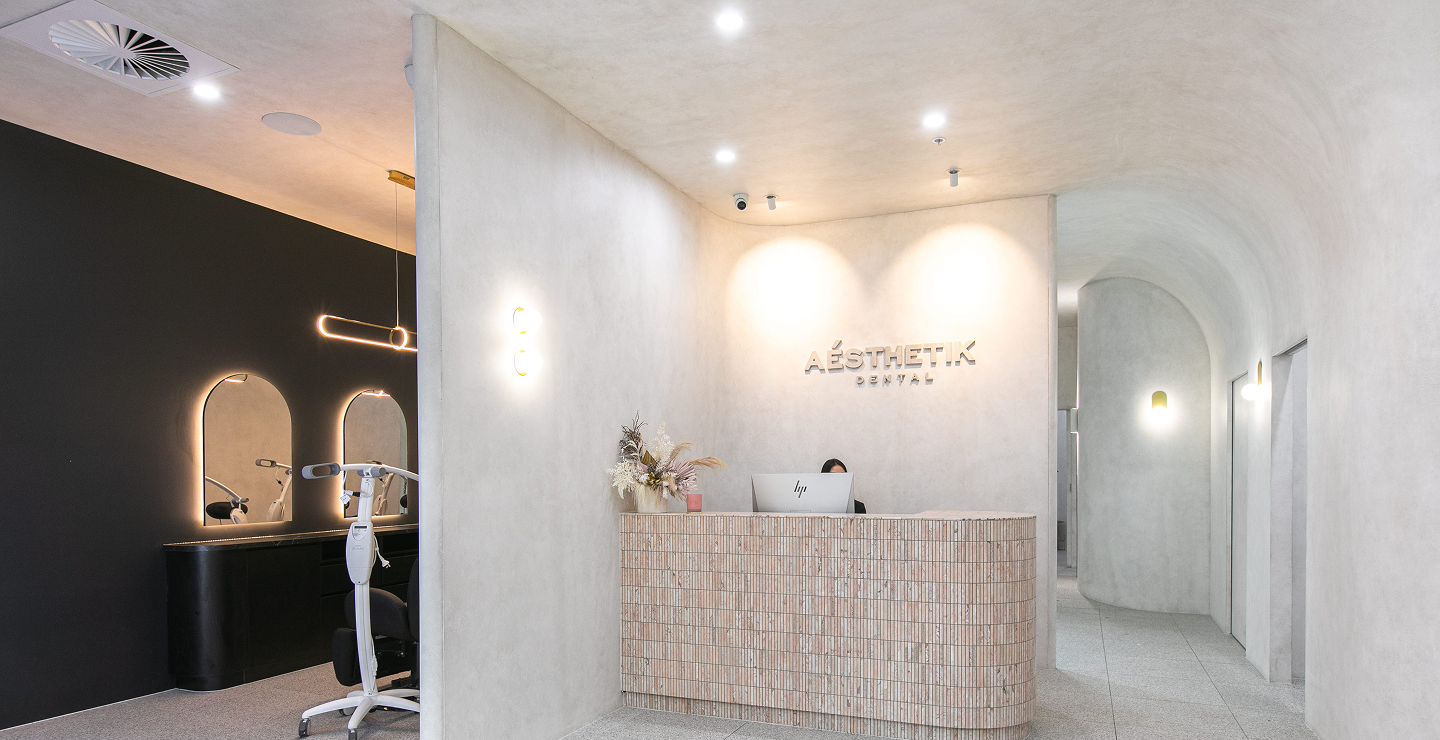
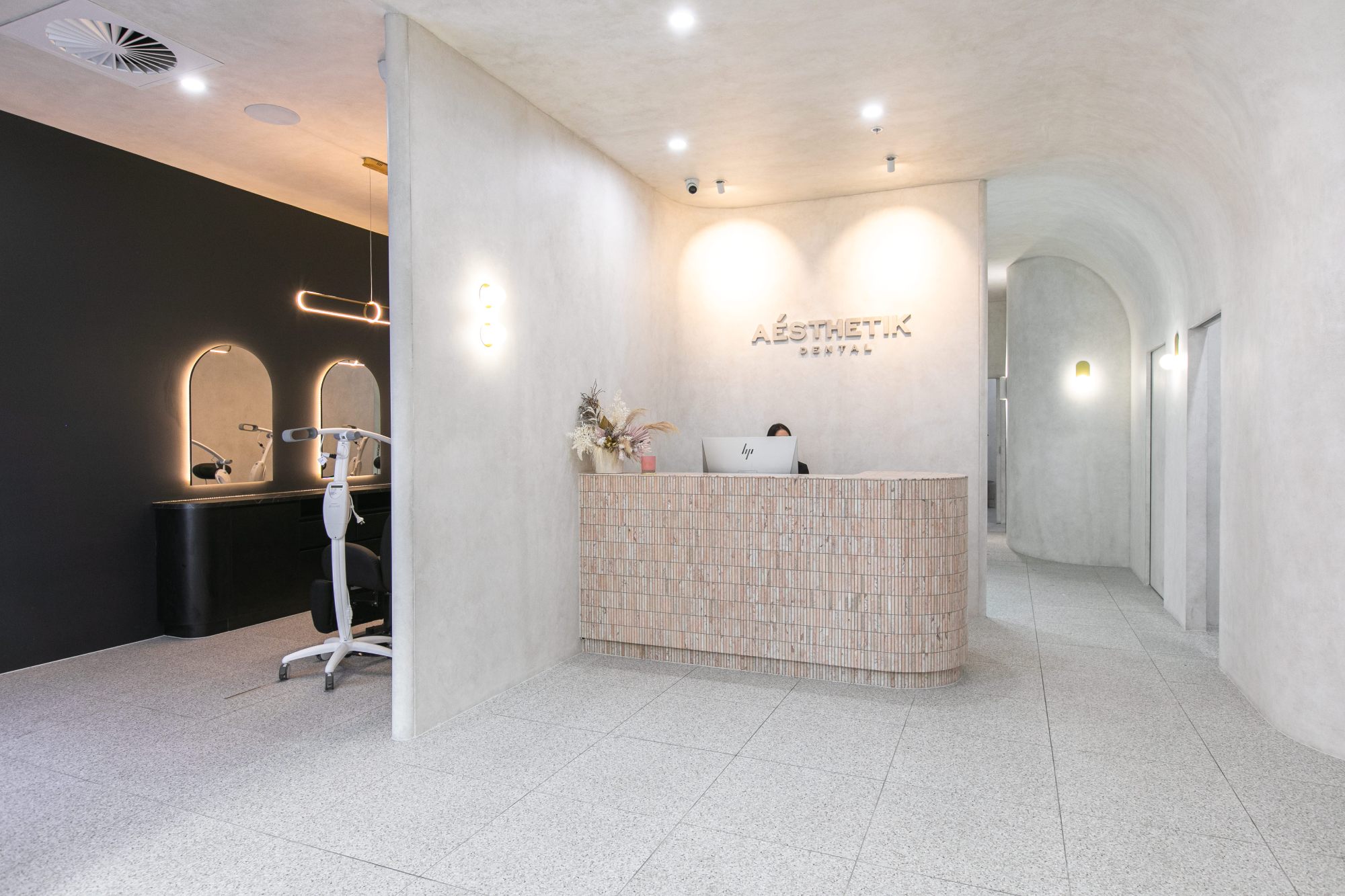
Your first general dental treatment visit in Australia runs 45 to 75 minutes for most adults. The dentist will go through your medical history, do a full oral exam including periodontal probing, take x-rays if they are due, and in most cases carry out a scale and clean on the same day. Before you leave you will have a written treatment plan with itemised costs, nothing is booked or started without your sign-off first.
On the practical side, bring your Medicare card, private health insurance card, photo ID, and a list of any medications you are currently taking. A full new patient appointment in 2026 typically costs between $250 and $450 before rebates. Aesthetik uses HICAPS, which means your health fund claim is processed on the spot and you only pay the gap.
Key Takeaways
- The appointment runs 45 to 75 minutes, and possibly longer if you have not been in a while.
- A comprehensive oral exam plus x-rays creates a baseline that makes every future visit faster and more useful.
- Most new patients receive a scale and clean on the same day, unless something more urgent comes first.
- You leave with a written treatment plan and itemised costs. Nothing proceeds without your sign-off.
- HICAPS processes your health fund claim on the spot. You only pay the gap fee, not the full amount upfront.
- Eligible children aged 0 to 17 can access up to $1,132 in general dental care through the Child Dental Benefits Schedule (CDBS).
- If you are anxious about the dentist, mention it when you book, not when you are already in the chair.
What Should I Expect at My First Dental Visit?
Most people coming in for their first general dental treatment appointment expect it to be more involved than it is. The visit covers your medical history, a full oral exam, x-rays if they are due, an oral cancer screening, and in most cases a scale and clean, all in one sitting. Here is how it actually runs.
-
Arrival and check-in (5 to 10 minutes)
Hand over your Medicare and health fund details. If new patient forms were not completed online beforehand, you fill those in now.
-
Medical and dental history discussion (10 minutes)
Your dentist understands your situation before looking in your mouth: medications, allergies, existing dental work, and what brought you in. Certain medications affect blood clotting and change what treatment is safe on the day.
-
Comprehensive oral exam (10 to 15 minutes)
A tooth-by-tooth assessment covering existing fillings, cracks, early decay, periodontal probing at six points per tooth, bite and occlusion, and jaw joint function. This last one matters more than most patients expect, and is covered in detail further below.
-
Digital x-rays if clinically due (5 to 10 minutes)
Bitewing x-rays reveal decay between teeth, bone levels, and root issues that are completely invisible to the naked eye. Digital x-rays use up to 80 percent less radiation than traditional film. If you are pregnant, mention it at booking.
-
Oral cancer screening (3 to 5 minutes)
The tongue, palate, cheeks, and lymph nodes are checked. Most patients barely notice it happening.
-
Scale and clean in most cases (20 to 30 minutes)
Ultrasonic scaling removes calculus and surface staining, then a polish. Calculus accumulates steadily without causing pain, which is exactly why it goes unnoticed until someone looks properly.
-
Treatment plan discussion (10 minutes)
Your dentist walks you through the findings, shows you the intraoral camera images and x-rays, and gives you a written treatment plan with itemised costs to take home. No pressure to commit on the day.
Total: 45 to 75 minutes for a standard adult new patient dental visit.
Book your new patient appointment online.
What Do I Need to Bring to My First Dentist Appointment?
The first dental appointment checklist is shorter than most people expect. Photo ID, your Medicare card, your private health insurance card, a list of current medications and known allergies, and any previous dental records or x-rays if you have them. If you do not have the records, do not worry, missing them will not push the appointment back.
| Must Bring | Helpful to Bring | Not Needed |
| Photo ID (driver’s licence) | Previous dental records or x-rays | Receipts from old appointments |
| Medicare card | Recent specialist letters | Cash (HICAPS handles fund claiming) |
| Private health insurance card | List of dental concerns or goals | Medical imaging from years ago |
| List of current medications | Current night guard or retainer | |
| Allergies and medical conditions list | A support person if anxious | |
| CDBS letter (eligible children) | Sports mouthguard for fitting check |
Your medications list is worth preparing carefully. Blood thinners, bisphosphonates, and immunosuppressants all affect what your dentist can safely do and when. If you already have a night guard, bring it. Your dentist can check whether it still fits and whether it is doing its job.
How Long Does a First Dental Appointment Take?
A first general dental treatment appointment takes between 45 and 75 minutes for most adults. Children typically finish in 30 to 45 minutes. If you have not been to a dentist in several years, or you have significant buildup, allow up to 90 minutes.
One thing that surprises a lot of people at their first time dentist visit as an adult: fillings, extractions, and restorative work almost never happen on the day. The appointment is diagnostic. Any treatment that comes out of it gets booked separately, after you have had a chance to look over the plan and costs at home.
How Early Should I Arrive for My First Dentist Appointment?
Ten to fifteen minutes early is enough for a first dentist appointment. That gives you time to hand over your Medicare and health fund cards and complete any remaining new patient forms before you are called in. If you filled the forms out online beforehand, five minutes is fine.
Find clinic location, parking, and accessibility information on why patients choose us.
What Forms Do I Need to Fill Out as a New Dental Patient?
Most clinics email the paperwork before your appointment so you can fill it out at home rather than arriving early to work through it on a clipboard. Your dentist reads it before you sit down, so it is worth being thorough, particularly the medical history section. Medications, existing conditions, and any history of dental anxiety all change how the appointment is approached.
The forms cover your current health conditions, medications, and allergies, past dental treatments, a privacy consent form under the Privacy Act 1988, a financial agreement covering gap fees and cancellation terms, and a HICAPS claiming authorisation. If you are bringing children aged 0 to 17, a CDBS eligibility form applies.
What Questions Will the Dentist Ask on the First Visit?
At your first general dental treatment visit, the dentist asks about your dental concerns, oral hygiene routine, medical conditions, medications, allergies, dental anxiety, last dental visit, and your oral health goals.
Mention it if you grind your teeth or wake up with a sore jaw, even if it does not seem related to why you are there. That is often where the more useful part of the conversation starts.
Common first-visit questions:
- What brings you in today and do you have any specific concerns?
- When was your last dental visit and what was done?
- Do you have any pain, sensitivity, or bleeding gums?
- How often do you brush and floss?
- Are you taking any medications, including blood thinners or supplements?
- Do you have any allergies, particularly to latex or local anaesthetic?
- Do you have any medical conditions such as diabetes, heart disease, or are you pregnant?
- Do you grind or clench your teeth, or wake up with jaw soreness or headaches?
- Are you happy with the appearance of your smile?
- Do you have any dental anxieties we should know about?
Be honest on question eight even if you have never connected it to your teeth. The jaw muscles, when clenched for hours during sleep, generate referred pain through the trigeminal nerve, which branches to the forehead, upper jaw, and lower jaw. What feels like a migraine, ear pain, or neck stiffness can trace directly back to nocturnal grinding.
A night splint repositions the bite into a relaxed posture so those muscles can finally recover. This gets identified at the initial dental consultation, often resolving symptoms patients have managed for years without knowing the source.
Do I Need X-Rays at My First Dental Check-Up?
Yes, most new patients need x-rays at their first general dental treatment visit. This is because a visual exam alone cannot determine decay between teeth, bone loss, root issues, and impacted wisdom teeth. A dental check-up for new patients without x-rays gives your dentist a partial picture at best.
| X-Ray Type | What It Shows | Frequency | Typical 2026 AU Cost |
| Bitewing x-rays (2 to 4 films) | Decay between teeth, early bone loss | Every 12 to 24 months | $60 to $110 |
| Periapical x-ray | Single tooth, root and bone detail | As clinically needed | $35 to $65 |
| Panoramic OPG | Full mouth, jaws, sinuses, wisdom teeth | New patients, then every 3 to 5 years | $130 to $180 |
| Cephalometric | Skull profile for orthodontic assessment | As indicated | $130 to $200 |
| CBCT (3D scan) | Complex implant or surgical planning | As clinically indicated | $250 to $450 |
A dentist who shows you the x-rays and intraoral camera images, and walks you through exactly what they found, is one you can trust. If findings are described without the evidence, that is worth paying attention to.
How Much Does a First Dental Visit Cost in 2026?
The general dentist first visit cost in Australia sits between $250 and $450 in 2026 when bundled as a new patient package covering a comprehensive oral exam, scale and clean, fluoride application, and bitewing x-rays. Private health rebates reduce out-of-pocket costs significantly, and HICAPS means you only pay the gap fee on the day.
| Service Item | ADA Item Number | Typical 2026 AU Fee | Typical Health Fund Rebate |
| Comprehensive oral exam (new patient) | 011 | $65 to $95 | $40 to $70 |
| Scale and clean | 114 | $130 to $190 | $90 to $150 |
| Fluoride application | 121 | $30 to $55 | $20 to $40 |
| Bitewing x-rays (two films) | 022 | $60 to $110 | $40 to $80 |
| Panoramic OPG x-ray | 037 | $130 to $180 | $80 to $130 |
| Bundled new patient package | combined | $250 to $450 | varies by fund |
| Emergency consultation | 014 | $90 to $140 | $50 to $90 |
| Composite filling (one surface) | 521 | $180 to $260 | $110 to $180 |
Figures are indicative Australian averages for 2026 and vary by clinic, location, and clinical findings. Confirm at booking.
Aesthetik Dental is a preferred provider with major health funds, offers HICAPS on-the-spot claiming, accepts CDBS for eligible children, and provides a written quote before any treatment proceeds.
Think of general dental care like car servicing. A routine service is a modest, predictable expense. A repair, once a problem has been allowed to develop, costs ten to fifty times more. A check-up and cleaning is inexpensive. A root canal is roughly ten times that. An implant to replace a tooth that could have been saved is around fifty times the cost. The patients who spend the least on general dental treatment across a lifetime are almost always the ones who attend regularly.
View our full price list for upfront 2026 fees with no surprises.
Will I Get a Cleaning at My First Dental Visit?
Yes, most patients receive a scale and clean at their first general dental treatment visit. Exceptions include heavy calculus buildup requiring a longer dedicated session, an acute emergency, or active gum disease needing a deep clean booked separately. Your dentist confirms which applies during the exam.
Should I Bring My Dental Records to a New Dentist?
Bringing previous dental records is helpful but not essential. Records from the past two years reduce the need for repeat radiographs and support continuity of general dental care. Australian dental practices are required by the Privacy Act 1988 to release records on patient request. Contact your previous practice one to two weeks before your new patient dental visit.
Comprehensive Dental Exam to Create a Long-Term Treatment Plan
A comprehensive dental exam at the first visit creates a documented clinical baseline that makes every future general dental treatment appointment faster, more precise, and more cost-effective. Change is tracked against established records rather than estimated from scratch.
What is documented at a first comprehensive exam
- Full periodontal probing (six-point gum measurement per tooth)
- Tooth-by-tooth condition including existing fillings and cracks
- Bite and occlusion assessment
- Jaw joint (TMJ) function
- Soft tissue and oral cancer screening
- Intraoral camera photographs
- Baseline radiographs (bitewings and OPG if due)
- Oral hygiene coaching
- Sterilisation and infection control review
Why the jaw assessment matters
A significant number of unexplained headaches, neck complaints, and shoulder tension are actually jaw problems. The muscles responsible for clenching during sleep never fully recover because nothing holds the bite in a relaxed position overnight. A splint does not change the underlying anatomy; it repositions the jaw so those muscles can rest. Identifying this at the first visit can resolve symptoms that patients have managed for years.
Why gum health goes beyond the mouth
Research consistently links untreated gum disease to cardiovascular disease, adverse pregnancy outcomes, fertility challenges, and associations with cognitive decline. People with gum disease are approximately twice as likely to develop cardiovascular disease and three times more likely to suffer a stroke. A comprehensive oral exam that detects early gum disease serves to identify a systemic risk factor that would otherwise go unnoticed.
Discover why patients choose us for thorough, unhurried first visits.
General Dental Treatment Packages for Common Tooth Problems
General dental treatment packages bundle the most relevant services for common clinical scenarios so patients understand costs before treatment begins. Common general dental treatment package examples include: a new patient package (comprehensive exam, scale and clean, fluoride, and bitewing x-rays), a family check-up package (parents and children seen the same day), a catch-up package (comprehensive exam, deep clean, and staged fillings), a CDBS package for eligible children within the $1,132 cap, and a cosmetic consultation package.
Browse our general dental services to find the package that suits your needs.
Dentist for Fillings, Extractions and Other General Treatments
A general dentist handles the vast majority of common dental treatments under one roof, including fillings, extractions, root canals, crowns, bridges, scale and cleans, mouthguards, night guards, and routine paediatric general dental care. Specialist referral is reserved for genuinely complex cases.
| Treatment | Visits Needed | Typical Time | 2026 AU Cost Range |
| Composite filling | 1 | 30 to 45 min | $180 to $320 |
| Simple tooth extraction | 1 | 20 to 40 min | $200 to $350 |
| Surgical extraction (wisdom tooth) | 1 | 45 to 90 min | $350 to $700 |
| Root canal therapy (front tooth) | 1 to 2 | 60 to 90 min | $1,100 to $1,800 |
| Root canal therapy (molar) | 2 to 3 | 60 to 90 min per visit | $1,800 to $2,800 |
| Porcelain crown | 2 | 60 min per visit | $1,800 to $2,500 |
| Bridge (3-unit) | 2 to 3 | 60 to 90 min per visit | $4,500 to $6,500 |
| Custom mouthguard | 2 | 30 min per visit | $250 to $400 |
| Night guard for grinding | 2 | 30 min per visit | $400 to $700 |
Small lesions caught early, before they cavitate, can sometimes be managed without restorative intervention. Left undetected, those same lesions become fillings, then root canals, then extractions.
Insurance-Friendly Clinic for Routine General Dental Procedures
An insurance-friendly general dental clinic processes your health fund claim on the spot via HICAPS so you only pay the gap fee, accepts major Australian health funds, provides written cost estimates before any treatment, and bulk bills eligible children under CDBS.
In practice, that means preferred provider status with Bupa, Medibank, HCF, NIB, AHM, and other major funds, written quotes before any treatment begins, annual limit and waiting period checks done at booking, and payment plans available for larger treatment plans.
Gentle General Dental Treatment for Patients with Dental Anxiety
Gentle general dental treatment adjusts pace, communication, and technique for patients who experience anxiety. Dental anxiety is clinically recognised and estimated to affect around one in six Australian adults to the point of avoiding general dental care altogether.
The fear response is often rooted in the nature of treatment itself: you are fully conscious while someone works inside your mouth, with every sense engaged. Combined with associations formed in childhood, this creates anxiety that does not resolve by being told to relax. What resolves it is preparation, control, and communication at every step.
What gentle general dental treatment includes: tell-show-do (every step explained before it happens), topical numbing gel before any injection, buffered local anaesthetic, slow-paced appointments with an agreed hand signal to pause, headphones or blankets on request, happy gas (nitrous oxide) for higher anxiety, IV sedation for severe cases, and clear written costs with no pressure to commit.
Mention anxiety at booking, not in the chair. The appointment runs differently when the clinical team knows in advance.
See why nervous patients choose Aesthetik Dental for a calmer first visit.
Family Dental Practice for Ongoing General Oral Health Care
A family dental practice provides general dental care across every life stage: toddlers at their first visit, school-age children on CDBS, teenagers needing mouthguards or wisdom tooth assessment, adults on routine recall, pregnant patients managing pregnancy gingivitis, and seniors with changing needs. Same-day appointments for multiple family members keep everyone on a consistent general dentistry treatment schedule.
Tooth decay is the leading chronic disease in Australian children and is almost entirely preventable. Children who attend regularly from an early age are far more likely to maintain the habit as adults. Early attendance also allows screening for jaw and airway development concerns that are significantly easier to address in childhood.
Pick up dentist-recommended toothbrushes, fluoride toothpaste, and oral care products from our shop.
How to Plan General Dental Treatment on a Budget
Planning general dental treatment on a budget starts with a written treatment plan from a comprehensive first visit for new patients, because you cannot prioritise what you cannot see. A practical budget plan:
- Get a full written treatment plan at the first visit with no obligation to commit.
- Identify which items are clinically urgent versus deferrable versus cosmetic, with your dentist’s guidance.
- Confirm your health fund annual limits and when they reset.
- Sequence treatment to use cover across two calendar years where timing allows.
- Ask about practice payment plans for crowns, implants, or multi-appointment general dental treatment.
- Book six-monthly preventive visits to keep future costs predictable and low.
View our prices for transparent 2026 fees and to plan your treatment.
What Counts as Preventive Versus General Dental Treatment?
Preventive dental treatment stops problems before they start, while general dental treatment repairs or replaces damage that has already occurred. Most Australian private health insurance policies separate the two with different rebate percentages.
| Preventive Dental Treatment | General Dental Treatment (Restorative) |
| Check-ups, scale and cleans | Fillings, crowns, root canals |
| Fluoride applications | Extractions, bridges, dentures |
| Fissure sealants for children | Emergency repairs |
| Custom mouthguards | Periodontal therapy |
| Goal: stop problems early | Goal: repair damage already present |
| Typical rebate: 70 to 100% | Typical rebate: 50 to 80% |
Teeth demineralise every time you eat and remineralise during the breaks in between. Preventive general dental care works with that natural cycle by removing the calculus saliva cannot, reinforcing enamel, and catching early imbalances before they become structural damage.
What General Dental Treatments Do I Need Each Year?
Most adults need two general dental treatment appointments per year: a check-up and clean every six months, plus any restorative work identified at examination, as recommended by the Australian Dental Association. Bitewing x-rays are typically taken every 12 to 24 months, an OPG every three to five years, and fluoride applied at each visit if requested. Higher-risk patients including smokers, people with diabetes, and those with active gum disease may need three to four monthly visits. Children benefit from six-monthly dental check-ups from age two.
Typical annual general dental treatment plan for an adult: two check-up and clean appointments, one bitewing x-ray series, fluoride per visit, restorative work as identified, and a night guard fitting if grinding is detected.
Step-by-Step Process for Getting Recommended Dental Treatments
The step-by-step process for getting recommended general dental treatment after your initial dental consultation is straightforward: review the written plan at home, confirm your private health rebate, prioritise by clinical urgency, and book the first follow-up. There is no obligation to commit on the day of your new patient dental visit.
- Review the written treatment plan at home without pressure.
- Ask clarifying questions by phone or at a follow-up consultation.
- Confirm your private health fund cover for each item, including waiting periods.
- Prioritise treatments by clinical urgency with your dentist’s guidance.
- Book the next appointment for the most urgent item first.
- Return every six months to maintain progress.
Once your plan is set, book your next appointment online.
Expert Viewpoint: A First Visit Sets the Foundation for Lifelong Oral Health
Most people budget for dental emergencies. Very few budget for dental health. That distinction is worth sitting with, because the two produce completely different outcomes over a lifetime.
The patients who keep their natural teeth into old age are not those with better genetics or more money. They are the ones who never let the gap between visits grow long enough for small problems to become expensive ones.
A first general dental treatment visit is the start of a documented clinical record that makes every future visit more accurate, more efficient, and less costly than the last.
Book your new patient appointment online, request your previous dental records, and check your private health rebate before you arrive. Our Melbourne clinics offer gentle, transparent general dental treatment with written pricing and no pressure to commit.
View our pricing before you book.
Frequently Asked Questions About First Visit General Dental Treatment
Can I book a first dental visit online?
Yes, Aesthetik Dental accepts new patient bookings online 24/7 via the online booking page. You choose your preferred dentist and time, and receive your new patient forms by email to complete in advance.
What if I have not been to the dentist in years?
There is no judgement at a first visit, even if it has been a decade or more. The dentist completes a comprehensive exam, takes updated x-rays, and creates a staged written plan if significant catch-up general dental treatment is needed. Many patients find their oral health is better than they feared.
Can I bring my child to my first dental visit with me?
Yes, most family practices welcome children at a parent’s appointment. Watching a calm parent at the dentist often makes a child’s own first visit easier. Aesthetik Dental also offers same-day family appointments.
What if I cannot afford the recommended treatment plan?
Speak openly with your dentist about the budget. Most practices offer payment plans, can stage work across two health fund years to maximise rebates, and will help prioritise clinically urgent items first. CDBS applies for eligible children aged 0 to 17, and DVA cards are accepted for veterans.
Is the first dental visit covered by Medicare?
Routine adult general dental treatment is not covered by Medicare. Eligible children aged 0 to 17 can access up to $1,132 over two calendar years through CDBS. Most adults use private health insurance extras with HICAPS on-the-spot claiming.
Will the dentist do treatment on the first visit or just an exam?
Most first visits include a comprehensive exam, x-rays, and a scale and clean where appropriate. Restorative general dental treatment such as fillings or extractions is scheduled at a follow-up appointment. Genuine dental emergencies are treated the same day.
What happens if x-rays show something serious?
The dentist explains the finding clearly, shows you the image, and outlines recommended next steps. You will not leave with unanswered questions. Urgent issues are addressed quickly via referral or a prioritised follow-up.
How do I know if a dental practice is right for my family?
Look for AHPRA-registered dentists, transparent pricing published online, HICAPS on-the-spot claiming, family-friendly hours, and consistent local reviews. A first general dental treatment visit is itself a chance to evaluate the practice. If communication and clarity of findings do not meet your expectations, you are entitled to seek care elsewhere.

Victoria Viti is the Creator & Founder of Aesthetik Dental, a leading general and cosmetic dental practice in Melbourne and Geelong. With a passion for redefining modern dentistry, she blends clinical expertise with aesthetics to deliver transformative, patient-centered care. Victoria is known for her innovative approach to smile design, focusing on accessibility, confidence, and natural results. Her work reflects a commitment to excellence, patient satisfaction, and advancing dentistry as both a science and an art.